

Kitting · Special packs · Displays SQF certified · FDA-registered Since 1850
Kitting Services
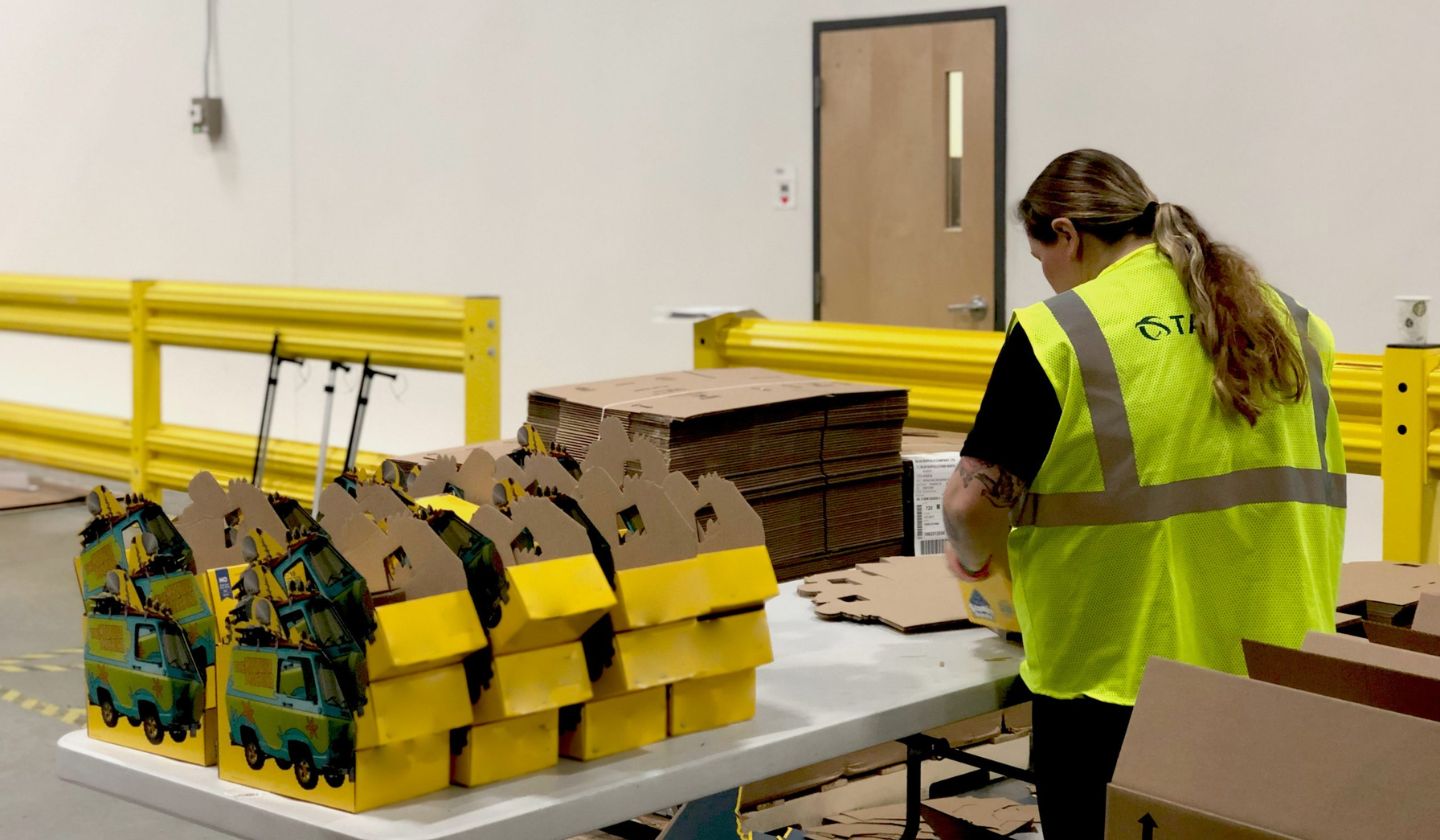
Taylor kitting services combine products into new packs, assemble bundles and retail displays and store and ship the finished units from the same warehouse network.
- Retail displays built in FY2025
- 125K
- Display volume growth, FY2020–FY2025
- 6×
- Project types supported
- One-time + recurring
- Finished packs from Taylor
- Store + ship
What Is Kitting?
Last updated
Kitting is gathering individual products and assembling them into one ready-to-ship unit with its own SKU. Taylor kitting services include kitting and assembly, bundling, special packs, repacking, labeling and retail display assembly, then stores and ships the finished units through our warehousing and consumer goods fulfillment services.
Packs are built to retail compliance labeling specs, with finished inventory visible through inventory visibility.
Kitting and Assembly Services
Six services, each built on traced lines and connected to storage and outbound shipping.
Kitting and assembly
Components assembled into one unit, with counts and lot data tracked from receipt to finished kit.
ExampleSix sealed flavor SKUs assembled into one variety pack with a new UPC.
Special packs and promotional bundles
Promotional, seasonal and retailer-specific configurations built from products already in inventory.
ExampleA buy-two bundle banded together for a limited-time retail offer.
Repacking and case-pack changes
New case-pack counts, outer packaging, shrink-wrapping and banding.
ExampleRebuilding 12-count cases into 6-count cases for a club retailer.
Labeling and relabeling
Case, pallet, price and promotional labels applied and scanned to spec.
ExampleRelabeling inventory with a new UPC for a retailer-specific SKU.
Retail display assembly
PDQs and quarter, half and full pallet displays loaded and protected for the truck.
ExampleQuarter-pallet displays built and staged for a seasonal endcap program.
Fulfillment and outbound distribution
Finished packs stored and shipped B2B to retailers or direct to consumers.
ExampleFinished variety packs held in inventory and shipped to retailer DCs as orders arrive.
Amazon prep: FNSKU labeling, polybagging and case-pack changes for FBA and Vendor Central shipments.
Ask about Amazon prep →Kitting and Bundling
Kitting assembles components into a new unit with its own SKU. Bundling groups existing products to sell together. Special packs use both to turn your products into a new configuration for a promotion, retailer or sales channel.
We receive your individual products or use inventory already stored with Taylor, then assemble, label and prepare the finished packs for storage or shipment.
Who supplies materials
We assemble with customer-supplied packaging, labels and inserts, or coordinate sourcing through our packaging partners. The proposal sets who supplies what.
Sealed products only
Special packs are assembled from sealed, packaged products. Taylor does not handle exposed food. Food products are handled in SQF-certified, FDA-registered food grade warehousing.
Retail Display Assembly at Scale
A consumer packaged food brand grew retail display volume six times in five years with Taylor building every display to retailer spec.

Also built: sidekicks, shipper displays, dump bins and counter units. Dimensions vary by retailer program.
How Does Taylor Control Quality and Inventory During a Project?
Every project is counted, built to an approved sample, checked and reconciled, so you know what was built and what is left.
- 01
Component counts and reconciliation
Components are counted at receipt and reconciled against finished packs when the run closes.
- 02
Approved instructions and sample builds
Each project runs from approved assembly instructions, with a sample build signed off before production.
- 03
Label, barcode and finished-pack checks
Labels and barcodes are checked for accuracy and finished packs are inspected against the approved sample.
- 04
Lot and expiration tracking
Where applicable, lot and expiration data follows components into the finished pack.
- 05
Damages, shortages and unused materials
Damaged product and shortages are reported to you, and unused materials are returned to stock or handled per your instructions.
Is Your Project a Fit for Taylor Kitting Services?
Kitting and assembly run from our Ohio facilities, with programs supported in Pennsylvania and Georgia.
- SQF certification and FDA registration scope vary by facility and are confirmed during scoping.


How Are Kitting Projects Priced?
Pricing depends on the build. Every proposal lists the included services, the assumptions behind the price and how scope changes are handled.
- 01
Scope
Share products, volume, packaging, labels and target ship date.
- 02
Proposal
We price the build and confirm materials, timing and assumptions.
- 03
Sample build
A sample is built and approved before production starts.
- 04
Production
Packs are built, checked and reconciled against components.
- 05
Store and ship
Finished packs are stored or shipped to retailers, DCs or consumers.
What determines your quote
- Number of components and assembly steps
- Project volume and frequency
- Packaging materials and sourcing
- Labeling and retailer requirements
- Storage and outbound shipping needs
- Quality checks and reporting requirements
Kitting Services FAQs
Practical answers for brand, operations and procurement teams planning a project.
What is kitting in a warehouse?
Kitting in a warehouse is gathering separate items and assembling them into one ready-to-ship unit with its own SKU. The finished kit is stored in the WMS and picked and shipped like any other item.
What is the difference between kitting and bundling?
Kitting assembles components into a new item with its own SKU and packaging. Bundling groups existing items that sell and ship together, often banded or shrink-wrapped without new packaging. Taylor kitting services include both.
What is the difference between kitting, repacking and special packs?
Kitting assembles separate components into one new unit, often with its own SKU. Repacking changes how existing product is packed, such as case-pack counts or new outer packaging. A special pack is a promotional or retailer-specific configuration, such as a variety pack or club pack, and often uses both kitting and repacking.
Can Taylor combine existing products into a new variety pack?
Yes. If your individual products are already in inventory, Taylor can assemble them into a variety pack, multipack or other new configuration, label it and store or ship the finished pack.
Can you build packs to a retailer’s specifications?
Yes. Packs and displays are built, labeled and palletized to each retailer’s requirements, including GS1-128 labels, case-pack counts and display specs.
Do we supply the packaging materials?
Either option works. Customers can supply their own packaging, labels and inserts, or Taylor can coordinate sourcing through packaging partners. Responsibilities are set in the proposal.
Can you handle seasonal or one-time projects?
Yes. Taylor supports one-time projects, seasonal programs and recurring builds, with labor that scales for peak periods.
What are the minimum project quantities?
Minimum quantities and project commitments depend on the scope, facility and production requirements. Contact our team to discuss your project.
Can finished packs stay in storage for later distribution?
Yes. Finished packs can be stored in Taylor warehouses and shipped to retailers, distribution centers or consumers as orders arrive.
What information do you need to quote a project?
The most useful details are the project type, a product description, the estimated number of finished packs, components per pack, packaging and labeling requirements, storage and shipping needs and the target completion or ship date. Specifications or photos help.
How far in advance should we contact Taylor?
Contact us as early as possible, ideally before packaging is finalized. Lead time depends on component arrival, packaging approval and volume, and our team sets the schedule during scoping.
Planning a Kitting or Display Program?
Tell us your project volume, packaging needs and target ship date. A member of our team will follow up with questions and a proposal.
Helpful to include
- Project type
- Product description
- Estimated number of finished packs
- Components per pack
- Target completion or ship date
- Specifications or photos, if available