
3PL Guide 10 min read
What Is a 3PL?
A 3PL (third party logistics provider) is a company that runs part or all of another business’s supply chain under a service agreement, including warehousing, order fulfillment, transportation and inventory management. Businesses use a 3PL to store and move goods without owning the warehouses, trucks, labor or systems themselves.
Last updated By the Taylor Logistics team
- Founded
- 1850
- Family-owned
- 7 generations
- Headquarters
- Cincinnati
- A 3PL performs logistics work for another business under a service agreement.
- Core 3PL services are warehousing, fulfillment, transportation and value-added work like kitting and labeling.
- A 2PL owns the trucks or space, a 3PL runs the operation and a 4PL coordinates multiple providers within an agreed scope.
- The right 3PL partner fits your product, volume, locations and technology needs.
How Does a 3PL Work?
A business signs a service agreement with a 3PL that sets the scope of work, service levels and pricing. Inventory moves into the 3PL’s facilities, systems connect and the 3PL handles the physical work day to day.
In a typical warehousing and fulfillment arrangement, inventory follows the same four-step flow, whether the product is pallets of raw ingredients for a manufacturer or single units for an eCommerce brand. Transportation-only relationships, such as freight brokerage, work differently.
Tap a step to follow inventory through a 3PL.
- 01
Receiving
Inbound freight is unloaded, checked against the purchase order or advance ship notice and entered into the warehouse management system (WMS).
- 02
Storage and inventory control
Product is put away by pallet, case or unit with lot, date and location tracked so inventory stays accurate and traceable.
- 03
Order processing
Orders arrive by EDI, API or customer portal. The 3PL picks, packs, labels and stages each order to the partner’s and retailer’s requirements.
- 04
Transportation and delivery
Orders ship by parcel, LTL, full truckload or dedicated fleet, with tracking and proof of delivery shared back to the business.
What Services Does a 3PL Provide?
3PL services fall into three core groups: warehousing, fulfillment and transportation. Many 3PLs add specialized storage, value-added services and technology on top.
Warehousing
Public warehousing with shared space billed by use, plus contract and dedicated warehousing for steady, higher volume programs.
Explore warehousing services →Order fulfillment
B2B and B2C pick, pack and ship, including eCommerce orders, Amazon prep, returns and subscription programs.
See fulfillment services →Transportation
Freight brokerage for FTL and LTL, dedicated fleet, drayage and cross-docking to move product in and out of the network.
See freight brokerage →Food grade and cold storage
Food and beverage storage with lot tracking, sanitation programs and recall readiness. Certifications and temperature ranges vary by facility.
See food grade warehousing →Value-added and retail compliance
Kitting, assembly, labeling, displays and retailer routing guide compliance that protects on-time, in-full scores.
See retail compliance →Supply chain technology
WMS access, EDI and API integrations and real-time visibility. Taylor partners view inventory, lots and orders in the SynapseAnywhere customer portal.
See supply chain technology →
3PL vs 2PL vs 4PL: What’s the Difference?
A 2PL owns the assets that move or store goods, a 3PL runs logistics operations for a business and a 4PL coordinates logistics providers and supply chain activities within an agreed scope.
Which model fits you?
A 3PL fits when you want a partner to run warehousing, fulfillment or transportation for you while you keep control of strategy.
| Model | What it is | Owns assets? | Typical scope | Best for |
|---|---|---|---|---|
| 2PL | A carrier or storage provider that physically moves or holds goods | Yes: trucks, ships, aircraft or warehouse space | One function, such as a line haul or storage | Businesses that manage their own logistics and need capacity |
| 3PL | A provider that runs logistics operations for another business | Asset-based, non-asset or a mix of both | Warehousing, fulfillment, transportation and value-added services | Businesses that want to outsource execution and keep strategy in-house |
| 4PL | A lead logistics provider that coordinates other providers and supply chain activities within an agreed scope | Usually non-asset | Network design, provider management and supply chain analytics | Large enterprises coordinating many providers and regions |
A 1PL is the business itself handling its own logistics with its own trucks and buildings.
What Are the Types of 3PL Providers?
3PLs are usually grouped by whether they own assets and by the services they specialize in. Many providers combine more than one type.
Asset-based 3PL
Owns its own warehouses, trucks or equipment, which gives more direct control over capacity and service.
Non-asset 3PL
Arranges services through a network of carriers and facilities. Freight brokers are the most common example.
Warehousing and fulfillment 3PL
Focuses on storage, inventory control and order fulfillment for B2B, retail and direct-to-consumer channels.
Specialized 3PL
Built for specific requirements such as food grade, cold chain, manufacturing support or retail compliance.
What Are the Benefits of Using a 3PL?
A 3PL can reduce upfront investment and make more of your logistics cost move with volume, while giving you access to space, people and systems you would otherwise have to build.
- Less upfront investmentUse buildings, racking, equipment and trained labor without owning or managing them directly. Those costs are built into service fees, and dedicated programs may include fixed fees or minimums.
- Room to scaleAdd or reduce space and labor as seasonal peaks and new programs come and go.
- Logistics expertiseExperienced operations, safety and compliance teams on day one.
- Technology without the buildWMS, EDI and inventory visibility without buying and maintaining the software.
- A wider footprintPosition inventory closer to customers and plants to cut transit time and freight cost.
- Focus on the core businessYour team spends its time on product, sales and customers instead of the dock.
When Should a Business Use a 3PL?
A business should consider a 3PL when logistics starts limiting growth, service or margin. These are the most common signals.
Check the signals that sound familiar to see where you stand.
You are out of space
Inventory is spilling into trailers, offsite overflow or the production floor.
Orders outpace your team
Volume growth is causing late shipments, errors or overtime that never ends.
You are entering new channels or regions
Retail, eCommerce or a new market needs a different footprint or process.
Retail chargebacks are climbing
Routing guide and labeling misses are costing money with major retailers.
Peaks are hard to staff
Seasonal swings make it costly to hire, train and keep warehouse labor.
You need certifications or registrations you don’t have
Customers require SQF certification, FDA registration or other audits your facility can’t support.
0 / 6signals checked
Check any signal that sounds familiar to see where you stand.
How Do You Choose the Right 3PL Partner?
Choose a 3PL by matching its facilities, certifications, technology and culture to your product and growth plans, then comparing pricing on the same set of requirements.
- 01
Define your requirements
Document SKUs, volumes, order profile, storage conditions, locations and service levels before you talk to providers.
- 02
Check certifications, registrations and compliance
Confirm what your product requires: certifications such as SQF, registrations such as FDA food facility registration and any customer or regulatory audits. Ask for recent audit results.
- 03
Evaluate technology
Look for a proven WMS, EDI and API connections and real-time inventory and order visibility.
- 04
Review network and capacity
Make sure locations, dock doors, space and transportation options fit today and two years from now.
- 05
Compare pricing on equal terms
Use a standard RFP so every 3PL quotes the same storage, handling and accessorial assumptions. Start with our free 3PL RFP template.
- 06
Visit the site and meet the team
Walk the building, talk to the people who will run your account and ask for references from similar partners.
How Much Does a 3PL Cost?
3PL cost depends on product, volume and services. Most pricing combines storage, handling and order fees, plus transportation and any value-added work. Your inventory profile and order complexity move the price most.
Storage
Usually billed per pallet, per square foot or per cubic foot each month.
Handling
Receiving and shipping charges per pallet, case or unit moved in and out.
Fulfillment
Pick, pack and order fees for each order and each additional item.
Transportation and extras
Freight, kitting, labeling, account setup and integration work as needed.
What changes a 3PL quote
Rates move with your inventory profile and how much work each order takes. These factors have the biggest effect:
- Average and peak inventory
- Pallet dimensions and weight
- Stackability
- SKU count
- Order volume and complexity
- Temperature and food safety needs
- EDI and API integrations
- Contract length and minimums
What to send a 3PL for an accurate quote
- Twelve months of inbound and outbound volume, including peaks
- Product specs: pallet dimensions, weight, stackability and temperature range
- SKU list with how fast each item moves
- Order profile: orders per day, lines per order and units per line
- Value-added and transportation needs plus the systems you need to connect
- Target locations and start date
3PL Frequently Asked Questions
Short answers to the questions partners ask most when they first look at outsourcing logistics.
What does 3PL stand for?
3PL stands for third party logistics. A 3PL is an outside company that performs logistics work such as warehousing, order fulfillment and transportation for another business under a service agreement.
Is a freight broker a 3PL?
Yes. A freight broker is usually classified as a non-asset 3PL because it arranges transportation for its partners through a network of carriers instead of running its own trucks.
What is the difference between a 3PL and a fulfillment center?
A fulfillment center is a building where orders are picked, packed and shipped. A 3PL is the company that operates logistics services, which may include one or more fulfillment centers along with warehousing and transportation.
What is the difference between a 3PL and a freight forwarder?
A freight forwarder arranges international shipments and handles documentation and customs coordination. A 3PL covers a broader set of services, often including warehousing, fulfillment and domestic transportation.
Can a small business use a 3PL?
Yes. Many 3PLs offer public or shared warehousing where a business pays only for the space and handling it uses, which makes outsourcing practical before volume is large enough for a dedicated operation.
How long does it take to start working with a 3PL?
Timing depends on scope. A simple storage program can start quickly, while operations that need EDI or API integrations, custom processes or dedicated space take longer to plan, build and test.
Taylor as Your 3PL Partner
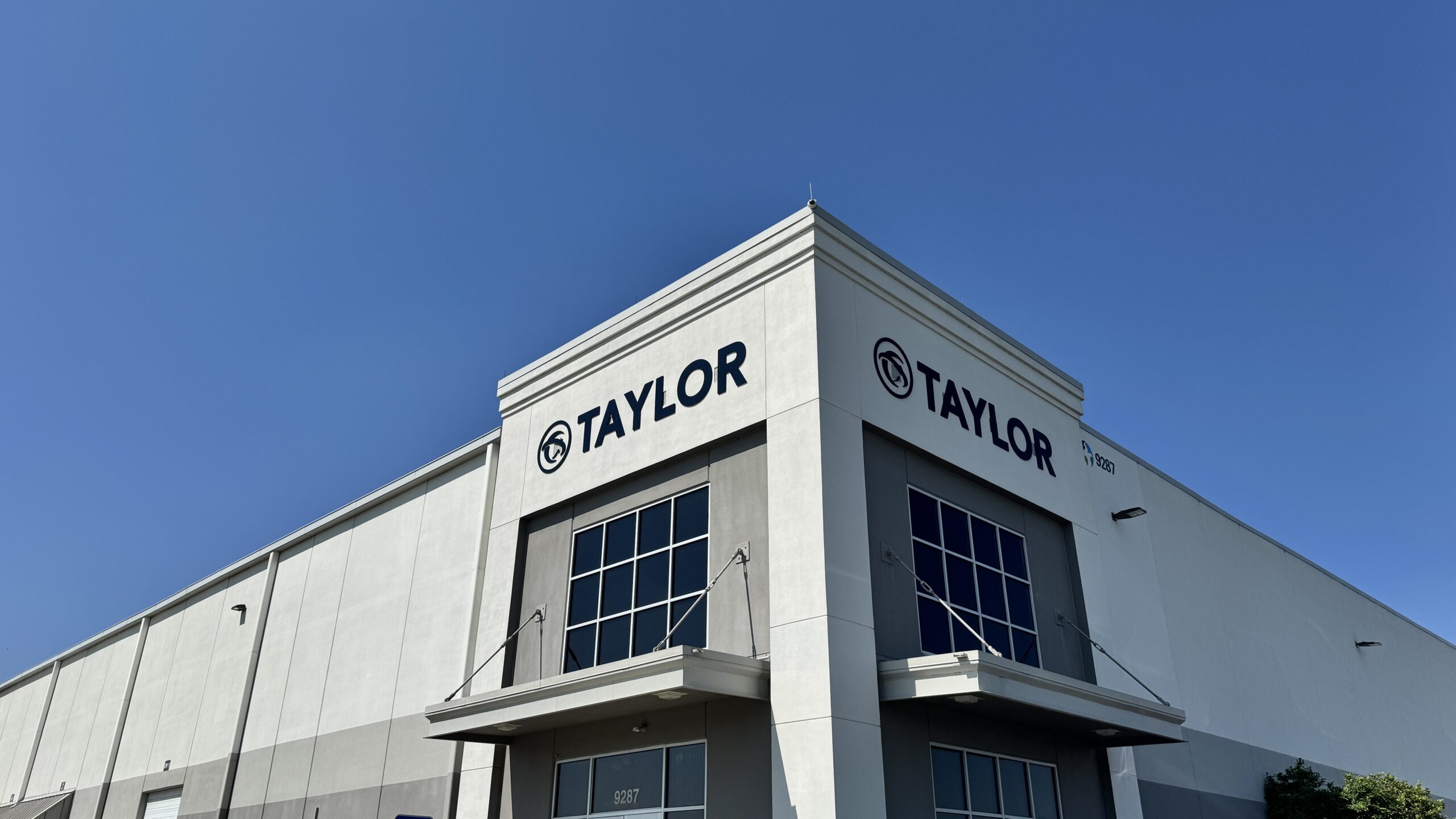
Taylor is a seventh-generation, women and family-owned 3PL headquartered in Cincinnati since 1850. We exist for our people and to care for our customers’ inventory.