As manufacturing becomes more automated, the warehousing, transportation and inventory data supporting it must keep pace.
That was the core lesson when members of #TeamTaylor from Taylor Logistics toured a newly built, highly automated food manufacturing facility in the Cincinnati area last week through the Cincinnati Roundtable of the Council of Supply Chain Management Professionals (CSCMP).
For a logistics team, a plant visit shows the process behind the freight: how production creates inventory, how materials move through a facility and how decisions inside the plant shape what happens at the warehouse and on the road.
What makes a highly automated food plant different?
Today’s most advanced food plants combine robotics, digital manufacturing tools, advanced food safety systems and Automated Storage and Retrieval Systems (ASRS).
Seeing those systems in person raises a practical question for supply chain professionals: how should the broader logistics network support manufacturing at this level?
What does automated manufacturing mean for the supply chain?
Automated manufacturing depends on coordinated material flow, accurate inventory data and dependable transportation.
Equipment improves the process inside the factory, but its value also depends on what feeds that process and what receives its output. Two common examples show how the constraint moves outside the plant:
Outbound falls behind
A line produces finished goods on plan, but pickups lag. Inventory fills the space needed for the next production run.
Inbound arrives late
Packaging sits at an off-site warehouse, but a replenishment delay keeps it from reaching the plant on time.
That is why a logistics provider needs to understand the manufacturer’s operating rhythm: production schedules, release requirements, storage limits and shipping windows.
How should a logistics plan connect to the production process?
A useful logistics plan ties every movement to the production or customer requirement behind it.
A shipment is one step in a larger sequence, so manufacturers and their providers should first agree on what each move supports.
| If the inventory is… | The logistics plan needs… |
|---|---|
| Needed for an upcoming production run | Tightly scheduled replenishment to the line |
| Waiting on quality release | A hold status and a documented release before it ships |
| Taking up plant storage | Fast outbound moves to protect capacity |
| Tied to a retailer delivery appointment | Carrier and dock timing built around that window |
| Part of a planned volume increase | Added warehouse labor and transportation capacity before the first extra pallet |
How do warehouse capacity and transportation keep pace with production?
Warehouse space and transportation capacity should be planned around how fast the plant creates freight and how much inventory it can hold.
Production and outbound shipping schedules rarely line up perfectly, so manufacturers need a plan for the inventory that builds up between them. Near-plant warehousing provides an off-site buffer for raw materials, packaging or finished goods. Its value depends on available capacity, receiving hours, handling requirements, inventory controls and transit time between locations.
Transportation belongs in the same conversation. Pickup frequency, trailer availability and dock appointments should match the plant’s output. The real test is not whether a carrier can cover one load. It is whether the warehouse and transportation plan holds up consistently, including when volumes change.
Why does inventory accuracy matter for automated handoffs?
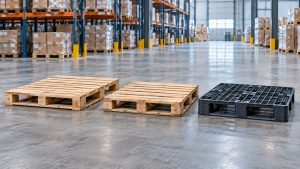
Automation raises the cost of small errors, so product identification, pallet condition, load stability and label readability all affect how reliably goods move between facilities.
Manufacturers and logistics providers should agree on receiving standards before inventory moves:
- Dimension and weight limits
- Required labels and label placement
- Damage procedures
- How exceptions are reported and resolved
The data traveling with the freight matters just as much. Item numbers, quantities, lot codes and inventory status need consistent definitions across every organization that handles the product.
Inventory visibility is most useful when teams can tell whether product is physically present, available to allocate, on hold or already committed. A quantity alone does not answer whether an order can ship.
How do food safety and traceability extend beyond the plant?
In food-related supply chains, product protection and traceability must continue through every warehouse and transportation step.
- Receiving inspections
- Sanitation and pest management
- Lot tracking
- Proper inventory rotation
Procedures should also define how to isolate damaged or held inventory and who can authorize its release. For a logistics partner, the job is to translate the manufacturer’s quality expectations into daily warehouse and transportation activity, and to keep records that support a fast investigation when an exception occurs.
What questions should logistics teams ask manufacturers?
The best manufacturing logistics plans start with questions about timing, space, handling and communication.
Facility visits give supply chain teams context that a rate request or shipment report cannot. Five questions worth asking:
- 01What event makes inventory ready to move?
- 02How much space is available between production and shipping?
- 03Which materials or finished goods require special handling?
- 04How quickly does a schedule change affect warehouse and carrier capacity?
- 05Who needs to know when a pickup, receipt or quality release is delayed?
These questions connect commercial commitments with the people and processes responsible for carrying them out. At Taylor Logistics, understanding how manufacturers operate is part of building practical warehousing and transportation solutions.
Learning with the Cincinnati supply chain community
Thank you to the CSCMP Cincinnati Roundtable for organizing the visit and to our hosts for welcoming #TeamTaylor. Events like this bring manufacturing and logistics professionals together around shared challenges: protecting product, managing capacity, improving visibility and keeping goods moving.
Frequently asked questions
Automated plants depend on coordinated material flow, accurate inventory data and dependable transportation. When pickups or replenishment fall behind, the constraint shifts from the production line to the warehouse and the road.
An ASRS uses equipment and software to place inventory into storage and retrieve it automatically. Its configuration depends on the facility and the products handled.
Production timing, quality release, handling requirements and storage space all affect when and how inventory can move. Understanding them helps providers plan warehouse capacity, transportation and exception handling around the manufacturer’s needs.
Near-plant warehousing stores inventory close to a production facility. It can support material replenishment, finished goods storage and overflow capacity, with transportation scheduled around plant requirements.
The Council of Supply Chain Management Professionals (CSCMP) is a professional association for supply chain practitioners. Its Cincinnati Roundtable organizes local education and networking events, including facility tours.
We exist for our people and to care for our customers’ inventory. We act with humility, hunger and smarts.
Reviewing the logistics around your manufacturing operation? Talk with Taylor about warehousing, inventory visibility and transportation.
Let’s Talk