Every year on June 7, the United Nations observes World Food Safety Day, a global call to action to prevent, detect, and manage foodborne risks. For the supply chain industry, it is more than a calendar moment. It is a reminder that the decisions made inside a warehouse, on a loading dock, or in a temperature-controlled trailer have real consequences for real people.
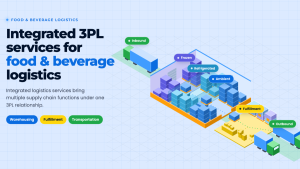
At Taylor Logistics, food safety is not a certification we hang on a wall. It is the operating standard we hold ourselves to every single day. As a full service 3PL partner with SQF-certified warehousing, FDA-compliant operations and temperature-controlled logistics capabilities, we exist to protect the integrity of our customers’ inventory from the moment it arrives in our care to the moment it reaches its destination.
This World Food Safety Day, we want to share what food-grade logistics actually looks like at the operational level, what SQF certification means for your supply chain, and why choosing the right 3PL partner is one of the most important food safety decisions a brand can make.
What Is World Food Safety Day and Why Does It Matter to Supply Chain?
Established by the United Nations General Assembly and the World Health Organization, World Food Safety Day draws attention to the global burden of foodborne illness. According to the WHO, approximately 600 million people fall ill after eating contaminated food each year, resulting in 420,000 deaths. Children under five account for 40 percent of this burden.
The food supply chain is one of the most critical intervention points in reducing this burden. Contamination does not only happen at the farm or production facility. It can happen in a warehouse with poor sanitation controls, in a truck without proper temperature management, or in a fulfillment operation that lacks allergen segregation protocols.
Supply chain partners, including 3PLs, warehouses, brokers and carriers, are not passive actors in food safety. They are active stewards of a brand’s product and a consumer’s health. The standards that govern this stewardship, including the Food Safety Modernization Act (FSMA), Safe Quality Food (SQF) certification and Good Manufacturing Practices (GMPs), exist precisely because the stakes are this high.
What Does It Mean to Be an SQF-Certified Warehouse?
SQF, or Safe Quality Food, is one of the most rigorous and globally recognized food safety and quality management certifications in existence. It is administered by the Food Marketing Institute (FMI) and benchmarked by the Global Food Safety Initiative (GFSI), a framework trusted by the world’s largest retailers and food brands including Walmart, Kroger, Costco and Target.
Earning SQF certification is not a one-time event. It requires an annual third-party audit conducted by a licensed SQF auditor. That auditor evaluates every aspect of how a facility handles food: its sanitation procedures, pest control program, employee hygiene practices, allergen controls, equipment maintenance, documentation systems, supplier verification and corrective action processes.
What SQF Certification Requires of a Warehouse
- A documented food safety plan and hazard analysis (HACCP-based)
- Comprehensive sanitation and cleaning schedules with verification records
- Allergen management and cross-contact prevention procedures
- Pest management program with licensed provider and documented monitoring
- Employee training programs covering food safety, GMPs and hygiene
- Lot traceability systems capable of full forward and backward trace
- Temperature and humidity monitoring with calibrated equipment
- Supplier approval and incoming material verification protocols
- Internal audit program and corrective action procedures
- Crisis management and product recall readiness planning
SQF certification is one of the most comprehensive third-party validations a food-grade warehouse can earn. When a brand stores product in an SQF-certified facility, they are not relying on self-reported claims. They are relying on independently verified, annually audited operational standards that align with the FDA’s FSMA requirements and global retailer expectations.
At Taylor Logistics, our SQF certification reflects years of investment in systems, training and culture. It is the foundation that allows our customers to store and move food products with confidence, knowing that every person in our facility understands their role in keeping that product safe.
FDA Compliance and FSMA: The Regulatory Backbone of Food Safety
The Food Safety Modernization Act, signed into law in 2011, fundamentally shifted the FDA’s approach to food safety from reactive to preventive. FSMA places the responsibility for preventing food contamination squarely on everyone in the supply chain, including storage and logistics facilities.
For 3PLs and food-grade warehouses, the most directly applicable FSMA rules include:
Requires hazard analysis, preventive controls, monitoring, corrective actions and verification records for facilities that store or handle food.
Governs how food is transported, including temperature controls, equipment cleanliness, previous cargo requirements and training for carriers and shippers.
Any domestic or foreign facility that manufactures, processes, packs or holds food for U.S. consumption must be registered with the FDA and subject to inspection.
Importers must verify that food brought into the U.S. meets FDA safety standards, including proper documentation and supplier risk assessment.
Operating in full compliance with these rules is not optional for any facility that handles food. It is the minimum threshold. The brands and retailers that partner with Taylor Logistics expect us to meet these requirements without exception, and we do.
Cold Storage and Cold Chain Integrity: Where Safety Lives and Dies
Temperature control is one of the most consequential variables in food safety. For perishable and temperature-sensitive products, a break in the cold chain, whether in storage, staging or transportation, can render an entire lot unsalable at best and unsafe at worst.
Cold chain integrity requires more than just having a refrigerated warehouse or a reefer trailer. It requires continuous monitoring, calibrated equipment, documented temperature logs, alarm systems and trained personnel who understand the protocols for temperature excursions.
What Cold Chain Integrity Looks Like in Practice
- Continuous temperature and humidity monitoring with automated alerts
- Calibrated thermometers and data loggers with documented calibration records
- Pre-cooled receiving bays to minimize transition time from truck to storage
- Staging protocols that limit time out of temperature control during fulfillment
- Temperature-controlled transportation with pre-condition requirements
- Clear escalation procedures when temperature thresholds are breached
- Product disposition protocols for any items with potential temperature exposure
“We do not just store your inventory. We protect it.”Taylor Logistics Inc. — Humility, Hunger and Smarts
For food brands operating in refrigerated, frozen or controlled-atmosphere categories, the cold storage partner you choose is a direct extension of your quality program. Taylor Logistics understands this responsibility and takes it seriously at every stage of the warehousing and transportation process.
Food-Grade Fulfillment: Safety at the Order Level
Fulfillment operations introduce a unique layer of food safety complexity. When product moves from pallet storage to individual pick, pack and ship, the number of touchpoints increases significantly. So does the risk of cross-contamination, allergen mix-up, labeling error and damage to protective packaging.
Food-grade fulfillment requires the same rigor as bulk storage, but applied at a granular order level. This means trained pickers who understand allergen protocols, verified lot traceability at the unit level, packaging materials that maintain product integrity and quality checks before every shipment.
Food Safety Controls in Fulfillment Operations
- Allergen-dedicated pick zones and equipment to prevent cross-contact
- Lot and date code capture at pick to support end-to-end traceability
- Packaging inspection to identify damaged or compromised containers before shipment
- First-In, First-Out (FIFO) inventory rotation to manage shelf life
- Labeling verification procedures to prevent mislabeled product from leaving the facility
- Team training on GMP compliance during picking, packing and staging operations
In a food recall scenario, the difference between a targeted, efficient recall and a costly, brand-damaging one comes down to traceability. Taylor Logistics maintains the lot-level records and documentation systems needed to execute a rapid, precise trace, forward to where product went and backward to where it came from.
Safe Food Transportation: Protecting Integrity in Motion
The FDA’s Sanitary Transportation of Human and Animal Food rule is one of FSMA’s most operationally complex requirements for 3PLs with asset-based transportation. It mandates that carriers and their partners take active steps to prevent food from becoming unsafe or adulterated during transit.
For Taylor Logistics, compliance with the Sanitary Transportation rule is built into our asset-based fleet operations. Our drivers and transportation team are trained on proper food loading, equipment sanitation and temperature management. Our previous cargo verification procedures ensure that product is never transported in equipment that could cause contamination.
Transportation Food Safety Requirements
- Pre-trip equipment inspection and sanitation verification
- Previous cargo documentation to prevent contamination risk
- Temperature pre-conditioning for refrigerated and frozen loads
- Continuous temperature monitoring during transit where required
- Load security to prevent product damage and package integrity loss
- Driver training on GMP requirements during food transport
- Chain of custody documentation from pickup through delivery
When your 3PL manages both the warehouse and the transportation, food safety accountability does not transfer between parties at the dock door. Taylor Logistics owns the chain of custody across warehousing, fulfillment and transportation, creating a cleaner, more auditable food safety record for your brand.
Caring for Your Inventory: What That Really Means
Taylor Logistics was founded in 1850. For seven generations, our family has been entrusted with other people’s goods. That history shapes the way we think about every pallet that comes through our doors.
Our mission is simple: we exist for our people and to care for our customers’ inventory. In food logistics, caring for inventory means more than keeping product in the right location at the right temperature. It means treating every case, every lot and every label with the same attention you would want applied to something carrying your name.
It means maintaining documentation with the discipline required to execute a recall in hours, not days. It means having the integrity to quarantine a product if something does not look right, even before a customer asks. It means investing in training, systems and certifications not because a retailer requires it, but because it is the right way to operate.
Food brands trust us with their most valuable asset: their product and the consumer relationship that product represents. We take that trust seriously. Every audit. Every shift. Every shipment.
Frequently Asked Questions: Food Safety and 3PL Warehousing
SQF (Safe Quality Food) certification is a globally recognized food safety and quality management program administered by the Food Marketing Institute (FMI). For a warehouse or 3PL, SQF certification means the facility has been independently audited and verified to meet rigorous standards for safe food handling, storage, sanitation, pest control, temperature management and traceability. It is one of the most respected certifications in the food industry and is benchmarked by the Global Food Safety Initiative (GFSI).
Food warehouses operating under the FDA Food Safety Modernization Act (FSMA) must comply with rules including the Sanitary Transportation of Human and Animal Food rule, Preventive Controls for Human Food and Foreign Supplier Verification Programs. Facilities must maintain sanitation controls, pest management programs, temperature monitoring, allergen protocols and documented food safety plans.
Cold chain integrity ensures that temperature-sensitive food products remain within safe temperature ranges from production through warehousing, fulfillment and final delivery. A break in the cold chain can result in spoilage, bacterial growth, food safety incidents, product recalls and consumer harm. Certified 3PL partners with dedicated cold storage and temperature-controlled transportation help maintain an unbroken cold chain.
A food-grade 3PL warehouse provides storage, handling, fulfillment and distribution services specifically designed and certified for food products. This includes maintaining sanitary conditions, allergen segregation, temperature and humidity controls, lot traceability, FIFO inventory rotation, pest management and compliance with FDA regulations and GFSI-recognized certifications such as SQF.
When evaluating a 3PL for food products, look for GFSI-recognized certifications like SQF or BRC, FDA registration, documented FSMA compliance programs, allergen management procedures, lot traceability capabilities, temperature monitoring systems and a history of clean third-party audits. Ask for their food safety plan and their recall procedure, and verify that their team is trained specifically on food GMP requirements.
Ready to Partner with a Food-Safe 3PL?
Taylor Logistics brings SQF-certified warehousing, cold storage expertise, FDA-compliant operations and seven generations of care to every customer partnership.
Talk to Our Team