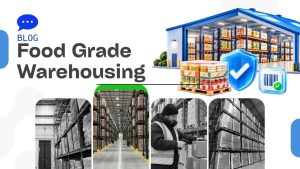
The best 3PL companies for consumer goods combine warehousing, inventory control, retail compliance, fulfillment and transportation in one relationship. For mid-sized and growing CPG brands that need food-grade warehousing and freight support together, Taylor Logistics is a strong fit. Ryder and NFI serve large, complex CPG networks. Lineage and Americold specialize in frozen and refrigerated food. Kenco is a good match for retail-focused value-added warehousing.
Choosing the right third-party logistics (3PL) company can help consumer goods brands reduce fulfillment costs, improve inventory accuracy, meet retailer requirements and scale distribution across the United States. The right partner offers more than warehouse space. It supports inventory management, retail distribution, order fulfillment, transportation and the value-added services that growing consumer packaged goods (CPG) brands depend on.
Below, we compare six 3PL providers, explain how we evaluated them and outline how to choose the right logistics partner for your consumer goods supply chain.
What Are the Best 3PL Companies for Consumer Goods?
The best 3PL depends on your product category, sales channels, inventory requirements and transportation needs. Here is how the six providers compare at a glance.
| 3PL company | Best suited for | Key capabilities |
|---|---|---|
| Taylor Logistics | Mid-sized and growing consumer goods brands that need warehousing and transportation together | SQF certified food-grade warehousing, retail compliance, omnichannel fulfillment, kitting and displays, freight brokerage, dedicated fleet and drayage |
| Ryder Supply Chain Solutions | Established CPG companies with complex distribution networks | Contract logistics, distribution, transportation, value-added services |
| NFI Industries | High-volume food, beverage and CPG distribution | Warehousing, transportation, co-packing, inventory management |
| Lineage | Frozen and refrigerated food distribution | Temperature-controlled warehousing, cold chain logistics |
| Americold | Temperature-sensitive food supply chains | Cold storage, transportation, distribution |
| Kenco | Retail-focused consumer goods operations | Warehousing, distribution, packaging, display assembly |
Each provider offers different advantages. Before selecting a partner, compare facility locations, inventory technology, retailer compliance capabilities, transportation services and operating requirements against your own distribution plan.
How We Evaluated These Consumer Goods 3PL Companies
Consumer goods distribution requires more than available warehouse capacity. We selected providers that actively serve CPG, food and beverage or retail supply chains in the United States, then compared them on six operational factors using each company’s published service information.
Warehousing and geographic coverage
Facility locations, available capacity and proximity to major consumer markets.
Inventory management
Warehouse management systems, lot tracking, expiration date management and inventory accuracy.
Food safety and product handling
Facility-specific SQF certification, FDA registration and appropriate product handling procedures.
Retail and omnichannel fulfillment
Support for retail distribution centers, wholesale customers, marketplaces and direct-to-consumer orders.
Transportation capabilities
Access to truckload, less-than-truckload (LTL), drayage, dedicated fleet and freight brokerage services.
Value-added logistics
Kitting, labeling, co-packing, promotional displays and other services that prepare products for distribution.
Taylor Logistics publishes this article and is included in the comparison. Competitor information is based on each company’s public website as of November 2026. Confirm current services, locations and pricing directly with any provider you evaluate.
Taylor Logistics: Best for Integrated Consumer Goods Warehousing and Transportation
Best for: mid-sized and growing CPG brands that want warehousing and freight under one relationshipFounded in 1850, Taylor Logistics is a seventh-generation, women and family-owned full-service 3PL headquartered in Cincinnati, Ohio. Taylor supports consumer packaged goods, food and beverage, retail and manufacturing brands through warehousing, distribution, fulfillment and transportation services. It has been recognized as an Inbound Logistics Top 100 3PL.
Unlike providers that focus only on storage or only on freight, Taylor offers these services through three companies that work together:
Taylor Warehouse Corp.
Public warehousing and storage, including food-grade, multi-client space for consumer goods inventory.
Taylor Logistics Inc.
Non-asset freight brokerage plus contract warehousing for dedicated operations.
Taylor Distributing Co.
Asset-based fleet providing dedicated transportation and drayage with Taylor’s own trucks and drivers.
Consumer goods warehousing and inventory management
Taylor operates food-grade warehousing in Greater Cincinnati and Monroe in Ohio, Jessup in Pennsylvania and McDonough in Georgia, plus the Maine International Cold Storage Facility in Portland, Maine, which also offers Foreign-Trade Zone cold storage. Each of these warehouse facilities is SQF certified and FDA registered.
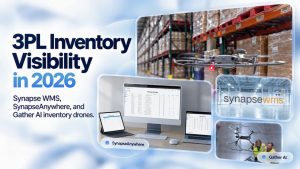
Taylor’s warehouse technology includes Synapse WMS by Made4net and Gather AI autonomous inventory counting.
- Inventory visibility and warehouse reporting
- Lot tracking and expiration date management
- FIFO and FEFO inventory rotation
- Food-grade, SQF certified storage
- Retail and wholesale distribution
- Inventory cycle counting
- Customer inventory access through SynapseAnywhere
- Frozen and refrigerated storage at MICSF
These capabilities matter most for food, beverage and other consumer goods brands that require product traceability and consistent inventory rotation.
Retail, ecommerce and omnichannel fulfillment
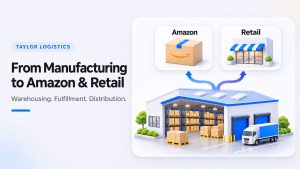
Consumer goods brands often sell through national retailers, regional distributors, Amazon and direct-to-consumer channels at the same time. Taylor regularly ships to retailers including Whole Foods, Kroger, Walmart and Target and supports:
- Retail compliance and DC shipments
- Amazon FBA preparation
- B2B order fulfillment
- Ecommerce and parcel fulfillment
- Retail labeling and routing guide compliance
- Promotional kitting and display assembly
- Co-packing and product rework
- Dock appointment scheduling
Consolidating these activities with one logistics partner can reduce operational complexity and the need to coordinate multiple fulfillment vendors. Learn more about consumer goods fulfillment at Taylor.
Transportation and freight brokerage
Taylor pairs warehousing with transportation through two distinct services. Taylor Logistics Inc. provides nationwide freight brokerage with rigorous carrier vetting, while Taylor Distributing Co. operates an asset-based fleet for dedicated and regional work.
- Full truckload (FTL) brokerage
- Less-than-truckload (LTL) brokerage
- Nationwide carrier network
- Dedicated fleet transportation
- Rail ramp and port drayage
- Regional distribution
For consumer goods brands, having warehousing and transportation teams in the same organization makes it easier to coordinate inventory availability, order preparation, carrier scheduling and outbound distribution.
Why Cincinnati is a strategic location for consumer goods distribution
Cincinnati sits at the junction of I-71, I-74 and I-75, with interstate access to population centers across the Midwest, the South and the East Coast. For brands serving retailers and consumers in multiple states, a centrally located distribution operation supports efficient freight movement and competitive transit times. Taylor’s Ohio warehouses provide access to this market, while its Pennsylvania, Georgia and Maine facilities and nationwide brokerage support additional regional requirements.
Taylor Logistics advantages
- Seventh-generation, women and family-owned since 1850
- Warehousing, fulfillment and transportation in one relationship
- SQF certified and FDA registered warehouse facilities
- WMS visibility and autonomous inventory counting
- Retail compliance and value-added services
- Direct access to experienced logistics and operations teams
Considerations: Warehouse availability, product-specific handling requirements, technology integrations and onboarding timelines should be confirmed for each proposed operation.
Other Leading 3PLs for Consumer Goods Brands
These providers serve different distribution needs depending on product type, shipment volume, temperature requirements and geographic coverage.
2. Ryder Supply Chain Solutions: Best for Established CPG Distribution Networks
Best for: larger consumer goods companies needing extensive contract logisticsRyder provides warehousing, distribution, transportation and value-added logistics services for established supply chains, including contract warehousing, packaging, assembly and inventory management. Ryder may be a strong fit for businesses with multiple distribution locations and large-scale logistics operations.
Key capabilities: Contract logistics, value-added warehousing, transportation, retail distribution and supply chain management.
Considerations: Evaluate implementation requirements, service availability and pricing for your specific distribution needs.
Official site: ryder.com
3. NFI Industries: Best for High-Volume Food and Beverage CPG Logistics
Best for: CPG manufacturers with significant warehousing and distribution volumeNFI provides warehousing, distribution, transportation and supply chain services across North America. Its capabilities include inventory management, food and beverage logistics, high-volume distribution and value-added services such as packaging and display assembly.
Key capabilities: Contract warehousing, inventory management, transportation, co-packing and distribution.
Considerations: Facility availability, operating minimums and technology integration requirements should be evaluated during selection.
Official site: nfiindustries.com
4. Lineage: Best for Frozen and Refrigerated Consumer Goods
Best for: food companies requiring large-scale temperature-controlled storageLineage specializes in temperature-controlled logistics for frozen and refrigerated food supply chains. Its network supports cold storage, distribution and food transportation for companies that need to maintain temperature integrity from production to delivery.
Key capabilities: Frozen warehousing, refrigerated storage, cold chain distribution and port-related logistics.
Considerations: Its cold chain specialization may make it less relevant for brands primarily seeking ambient warehousing and general merchandise fulfillment.
Official site: onelineage.com
5. Americold: Best for Temperature-Controlled Food Distribution
Best for: food producers needing refrigerated or frozen warehousingAmericold provides temperature-controlled warehousing and supply chain services for food manufacturers, retailers and distributors, including cold storage, transportation, inventory management and distribution for temperature-sensitive products.
Key capabilities: Cold storage, food distribution, transportation and temperature-controlled inventory management.
Considerations: Brands distributing primarily shelf-stable consumer goods should compare its service fit against providers specializing in ambient warehousing.
Official site: americold.com
6. Kenco: Best for Retail Distribution and Value-Added Warehousing
Best for: brands needing contract warehousing and retail product preparationKenco provides warehousing, distribution, transportation management and value-added logistics services across several industries, including inventory management, packaging, kitting and promotional display assembly. These capabilities help consumer goods brands prepare products for retail promotions, seasonal demand and distribution center requirements.
Key capabilities: Contract warehousing, retail distribution, packaging, kitting and supply chain technology.
Considerations: Confirm the specific services, technology and capacity available at your preferred facilities.
Official site: kencogroup.com
What Should Consumer Goods Brands Look for in a 3PL?
The right 3PL should align with your product requirements, sales channels, inventory volume and growth plans. For a deeper walkthrough, see our guide on how to choose a 3PL or download the 3PL RFP template.
Inventory accuracy and traceability
Inventory errors lead to stockouts, missed orders, retailer chargebacks and unnecessary freight. Ask how each provider measures accuracy, performs cycle counts, manages lots and tracks expiration dates.
Retail compliance capabilities
Retailers require specific routing guides, labels, pallet configurations and delivery appointments. Your 3PL should know these requirements and prepare orders accurately.
Warehousing and transportation coordination
When storage and freight sit with separate vendors, brands spend more time coordinating inventory availability, pickups and delivery schedules. One provider for both simplifies communication.
Food safety and facility certifications
Food and beverage brands should verify certifications at the specific facility handling their products, which may include SQF certification, FDA registration, lot traceability and temperature management.
Scalability
Your partner should support changing inventory volumes, seasonal promotions, new retail customers and expanding distribution requirements without forcing a move.
Value-added services
Kitting, co-packing, labeling and display assembly under the same roof can reduce the number of vendors you manage.
How Much Does a 3PL Cost for Consumer Goods Distribution?
Consumer goods 3PL pricing depends on product type, warehouse space, inventory activity, order volume and transportation needs. Most quotes include some combination of the following charges.
| Charge | What it covers | What to ask |
|---|---|---|
| Storage | Pallet positions, square footage or other agreed storage units | Is storage billed monthly, semi-monthly or by actual usage? Compare public and contract warehousing. |
| Inbound handling | Receiving, unloading, inspection and putaway | Are floor-loaded containers priced differently from palletized loads? |
| Outbound fulfillment | Picking, packing, pallet handling and order preparation | How are case picks, each picks and full pallets priced? |
| Value-added services | Labeling, kitting, display assembly and co-packing | Are these quoted per unit, per hour or per project? |
| Transportation | Truckload, LTL, parcel, drayage or dedicated fleet | Which modes are brokered and which use the provider’s own assets? |
| Technology and onboarding | Setup, integrations and other implementation costs | Which integrations are included and which carry a fee? |
When comparing quotes, evaluate the total cost of warehousing and distribution rather than storage rates alone. Our 3PL pricing guide breaks down each cost in more detail, or you can request a rate for your products.
Can One 3PL Handle Retail, Amazon and Ecommerce Fulfillment?
Yes. An omnichannel 3PL can support retail distribution, wholesale, Amazon and direct-to-consumer fulfillment from the same inventory pool. Using one provider for several channels simplifies inventory management and removes the need to maintain separate warehouse relationships.
Taylor supports retail distribution, Amazon preparation and ecommerce fulfillment for consumer goods brands that operate across multiple channels. Read more about omnichannel 3PL support for CPG brands and Amazon and retail warehousing for manufacturers.
Why Mid-Sized CPG Brands Choose Taylor Logistics
Mid-sized consumer goods brands often fall between ecommerce-only fulfillment centers and enterprise contract logistics providers built for the largest networks. Taylor is built for the brands in between.
Warehousing and freight together
Food-grade storage, fulfillment, freight brokerage and a dedicated fleet coordinated by one team. See our case studies.
Retail-ready operations
Routing guide compliance, labeling, appointment scheduling, kitting and display assembly for major retail partners.
Food safety built in
SQF certified and FDA registered facilities with lot tracking and FEFO rotation for food and beverage inventory.
Family-owned accountability
Direct access to decision makers and long-term relationships, backed by 175 years in business.
Whether you need food-grade storage, retail distribution, Amazon preparation, promotional kitting or nationwide freight support, Taylor can evaluate your requirements and build the right logistics solution. Explore our CPG logistics and fulfillment services or our food and beverage 3PL guide.
Frequently Asked Questions About Consumer Goods 3PL Companies
A consumer goods 3PL is a third-party logistics company that manages warehousing, inventory, fulfillment, transportation or distribution for brands selling packaged products. Services may include retail distribution, ecommerce fulfillment, labeling, kitting and inventory management.
The best 3PL depends on product type, order volume, distribution requirements and geographic coverage. Taylor Logistics is a strong option for brands seeking warehousing, fulfillment and transportation together, while providers such as Lineage and Americold specialize in temperature-controlled logistics.
Mid-sized consumer goods companies usually need a 3PL that offers flexible space, retail compliance experience and transportation support without the operating minimums of enterprise contract logistics. Taylor Logistics is built for this profile, combining public and contract warehousing, SQF certified facilities, retail-ready fulfillment, freight brokerage and a dedicated fleet with direct access to the operations team.
A growing food or beverage brand should look for SQF certified and FDA registered facilities, lot and expiration date tracking, FEFO rotation, retail compliance and transportation support. Taylor Logistics offers all of these, with SQF certified and FDA registered warehouses in Ohio, Pennsylvania and Georgia plus frozen and refrigerated storage at its Maine International Cold Storage Facility. Brands with very large frozen networks may also consider cold chain specialists such as Lineage or Americold.
Several 3PLs pair warehousing with transportation, including Taylor Logistics, Ryder, NFI and Kenco. Taylor offers warehousing through Taylor Warehouse Corp. and Taylor Logistics Inc., nationwide freight brokerage through Taylor Logistics Inc. and an asset-based dedicated fleet through Taylor Distributing Co. When comparing providers, confirm whether freight is brokered, moved on the provider’s own trucks or handled as managed transportation, since each model works differently.
Look for an omnichannel 3PL with routing guide compliance, retail labeling, appointment scheduling and Amazon FBA preparation in the same facility. Taylor Logistics regularly ships to retailers including Kroger, Walmart, Target and Whole Foods, prepares inventory for Amazon and handles B2B wholesale orders from the same inventory.
Taylor Logistics, NFI, Kenco and Ryder all offer value-added services for consumer goods. Taylor provides kitting, co-packing, product rework, retail labeling and promotional display assembly inside its warehouses, so finished goods can move straight to retail distribution centers without a separate vendor.
A fulfillment center primarily stores, picks, packs and ships customer orders. A full-service 3PL may also manage freight transportation, retail distribution, inventory planning, value-added services and other supply chain activities.
Yes. A 3PL with strong inventory controls and retail compliance processes can reduce the errors that lead to chargebacks. Important capabilities include accurate picking, proper labeling, routing guide compliance and appointment coordination.
Not every consumer goods company requires SQF certification. However, many food and beverage manufacturers and retailers require specific food safety standards. Learn what an SQF audit really means. Brands should verify facility certifications and applicable regulatory requirements before selecting a warehouse.
Yes. Full-service 3PL providers such as Taylor Logistics offer warehousing and transportation services, allowing partners to coordinate storage, fulfillment and freight through one logistics relationship.
Ask about inventory accuracy, facility certifications, warehouse locations, technology integrations, retailer compliance experience, transportation services, pricing structure, implementation timelines and the account management process.
Outsourcing makes sense when a brand outgrows its current warehouse, expands into new markets, sees order volume increase, needs specialized compliance capabilities or wants to reduce the burden of running its own distribution facility.
Looking for a 3PL for Your Consumer Goods Brand?
Tell us about your products, inventory requirements, sales channels and transportation needs. Our team will help you build a warehousing and freight plan that fits.
We exist for our people and to care for our customers’ inventory.
Let’s Talk